
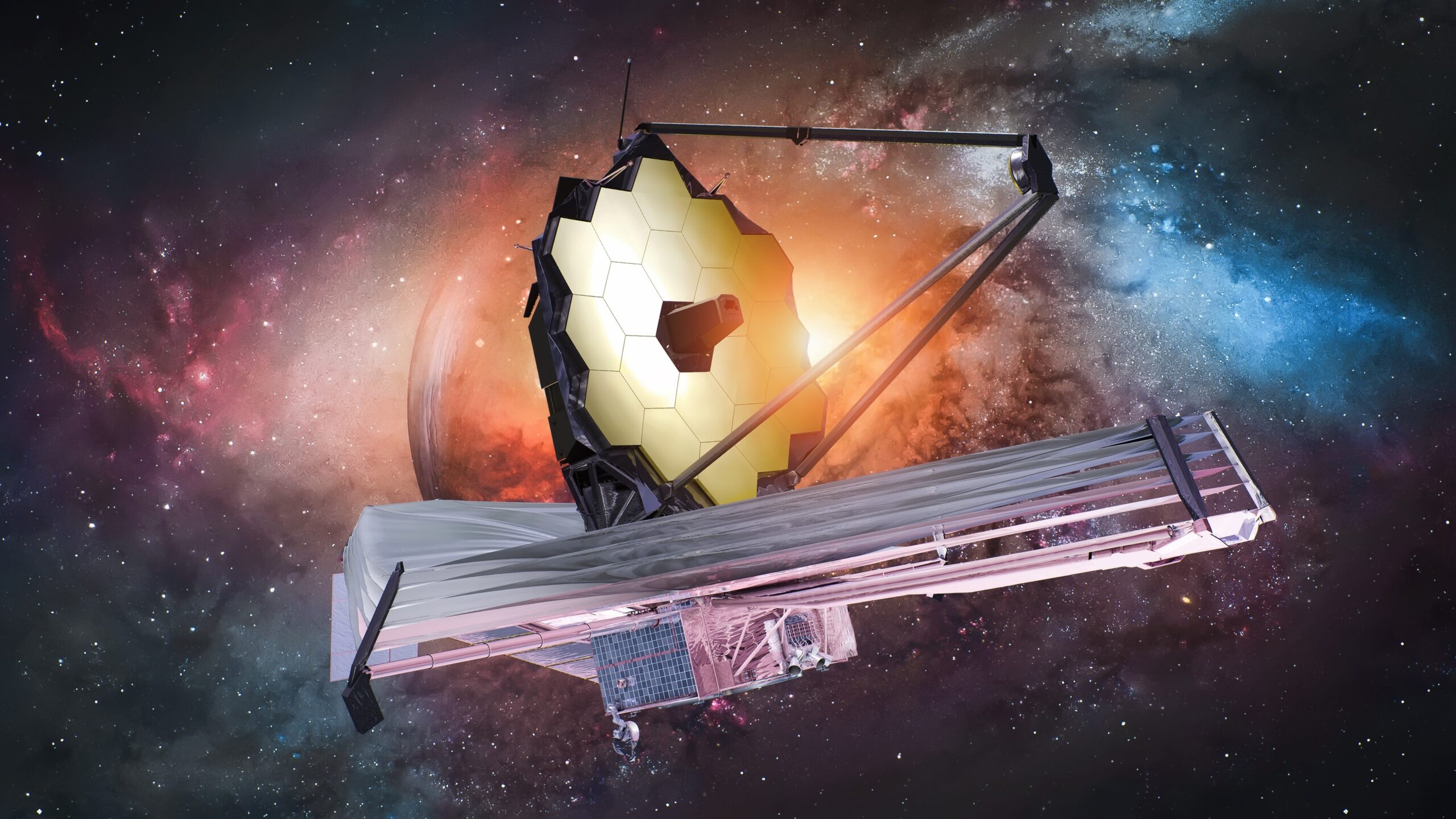
The James Webb Space Telescope: A Revolutionary Invention in Space Science
Space science has witnessed extraordinary advancements over the past few decades, but few inventions have transformed our understanding of the universe like the James Webb Space Telescope (JWST). Launched by NASA in December 2021, JWST is considered one of the most powerful and sophisticated telescopes ever built. Its ability to observe the cosmos in unmatched detail makes it a milestone in scientific innovation and a symbol of human curiosity. In this blog, we explore why the James Webb Space Telescope is such a groundbreaking invention and how it continues to reshape space science.
What Makes the James Webb Space Telescope Special?
The JWST is often described as the successor to the Hubble Space Telescope, but it is far more advanced. Equipped with a massive 6.5-meter primary mirror, it captures light from distant stars and galaxies with greater precision than any other telescope. Unlike Hubble, which mainly observes visible light, JWST specializes in detecting infrared radiation. This allows it to see through cosmic dust clouds and observe objects that are billions of years old—objects formed shortly after the Big Bang.
By collecting infrared images, JWST can study the earliest galaxies, analyze the atmospheres of exoplanets, and help scientists understand how stars and planetary systems are born. This gives astronomers the ability to look deeper into space—and further back in time—than ever before.
The Journey Behind the Innovation
The development of the James Webb Space Telescope was no small feat. It took more than 20 years of planning, engineering, and testing by thousands of scientists and engineers across the world. The telescope had to be folded like an origami structure to fit inside the rocket during launch. Once in space, it successfully deployed its sunshield, mirrors, and instruments—an achievement many experts called a “perfect unfolding.”
Its famous sunshield, as big as a tennis court, protects the telescope from solar heat and keeps its instruments extremely cold. This is essential for observing faint infrared signals from distant galaxies.
How JWST Is Changing Our Understanding of the Universe
Since it began transmitting images in 2022, JWST has revealed breathtaking details of star-forming regions, ancient galaxies, and even planets outside our solar system. Some discoveries include:
- The first high-resolution images of early galaxies, formed only a few hundred million years after the Big Bang.
- Detection of water vapor in the atmospheres of some exoplanets, raising new possibilities about the search for life.
- Detailed images of nebulae, showing how stars are born inside dense clouds of gas and dust.
Each photograph and data set from JWST is helping scientists rewrite textbooks and answer long-standing questions about the universe.
A Glimpse Into the Future of Space Exploration
The James Webb Space Telescope represents a major leap forward in space science. Its contributions will guide future missions and inspire young learners to explore astronomy, physics, and engineering. As this invention continues to unlock cosmic mysteries, it stands as a powerful example of what humanity can achieve through innovation and scientific curiosity.
If you would like, I can write a meta description, keywords, or a title optimized for SEO as well!
I prefer this response
